Signs & Signals
Learn the visuals and controls that show up fast on test day.
Start with the rules the exam expects you to recognize instantly: regulatory signs, warning signs, pavement markings, lane arrows, and signal colors. This module is about fast identification and the action each control demands, so you can move from guessing at symbols to reading the road the way the handbook expects.
The rules that matter
- Shape and color tell you the rule before you read a word: an octagon is always stop, a triangle is always yield, a diamond is always a warning.
- Yellow means stop if you can do it safely. Speeding up to beat the light is the wrong answer on the test and on the road.
- Flashing red works exactly like a stop sign. Flashing yellow means slow down and proceed with caution.
- A green arrow protects your turn; a green light does not. On a green ball you still yield to oncoming traffic and to pedestrians.
- A solid yellow line on your side means no passing. A solid white line means stay in your lane.
- Right on red is allowed after a complete stop and yielding, unless a sign prohibits it — and some cities ban it outright.
The lessons in this module
Each lesson is one short set of questions. If you've missed questions in this module before, a few come back at the start. Progress saves automatically; sign in only if you want cross-device sync.
Lesson videos
15 lessons · See all →Read this in the handbook
Look for these sections: Traffic Signs, Traffic Signals, Pavement Markings.
Where these rules come from
We do not copy official handbooks — most states do not allow it. What we do instead: state the rule in our own words, then name the official document behind it. 130 questions in this module cite 28 official documents, none checked earlier than 2026-05-17. The 6 most-cited are below.
| Official document | Sections cited |
|---|---|
MUTCD 11th Edition, Part 2 — Signs (General) ↗ National · Checked 2026-08-01 | Traffic Signs — General |
MUTCD 11th Edition, Part 3 — Markings ↗ National · Checked 2026-08-01 | Pavement and Curb Markings |
MUTCD 11th Edition, Part 4 — Highway Traffic Signals ↗ National · Checked 2026-08-01 | |
MUTCD 11th Edition, Part 2, Chapter 2C — Warning Signs ↗ National · Checked 2026-08-22 | Traffic Signs — Warning Signs |
MUTCD 11th Edition, Part 6 — Temporary Traffic Control ↗ National · Checked 2026-08-01 | Temporary Traffic Control — Construction Signs |
MUTCD 11th Edition, Part 2, Chapter 2B — Regulatory Signs ↗ National · Checked 2026-08-22 | Traffic Signs — Regulatory Signs |
Opening a source takes you to the agency's own site, never to a copy of ours. If a source is out of date or broken, say so from any question.
Practice this module
Instantly graded questions, with the explanation behind every answer.
Keep using the focused drill, or choose Marathon to work through the full bank.
Keep practising here
The free app adds offline study and native reminders; the complete question bank remains available here on the web.


Review these questions
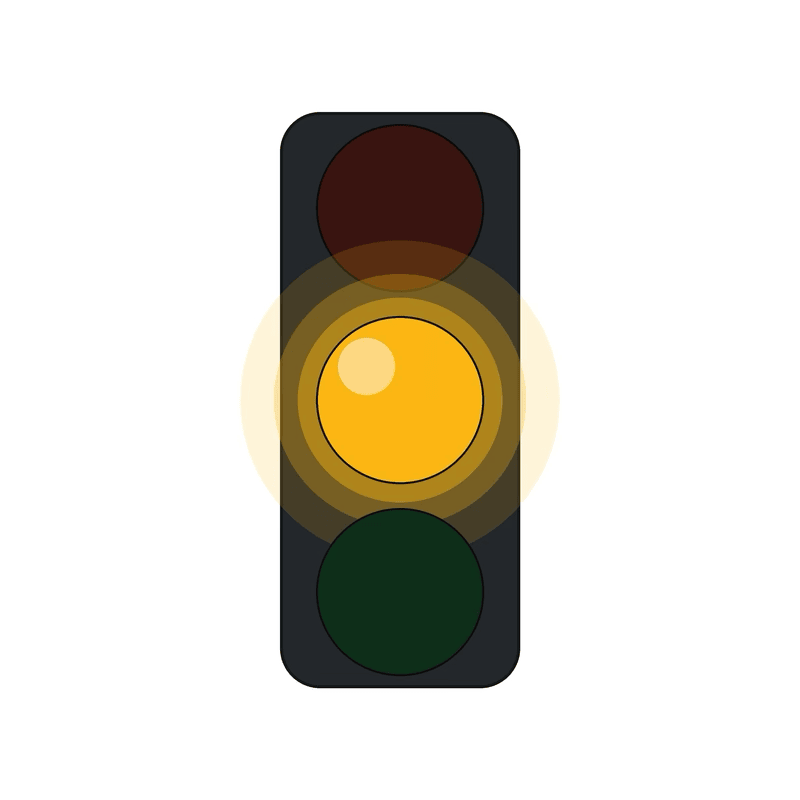
This signal has just turned steady yellow. You should:
- A. Stop if you can safely; the light is about to turn red
- B. Speed up to beat the red light
- C. Continue at the same speed without concern
- D. Stop only if a car is ahead of you
Show answer
A. Stop if you can safely; the light is about to turn red — A steady yellow light warns that red is coming, so stop if you can do so safely rather than racing through the intersection.
Universal rule · checked against MUTCD 11th Edition, Part 4 — Highway Traffic Signals · verified 2026-08-01
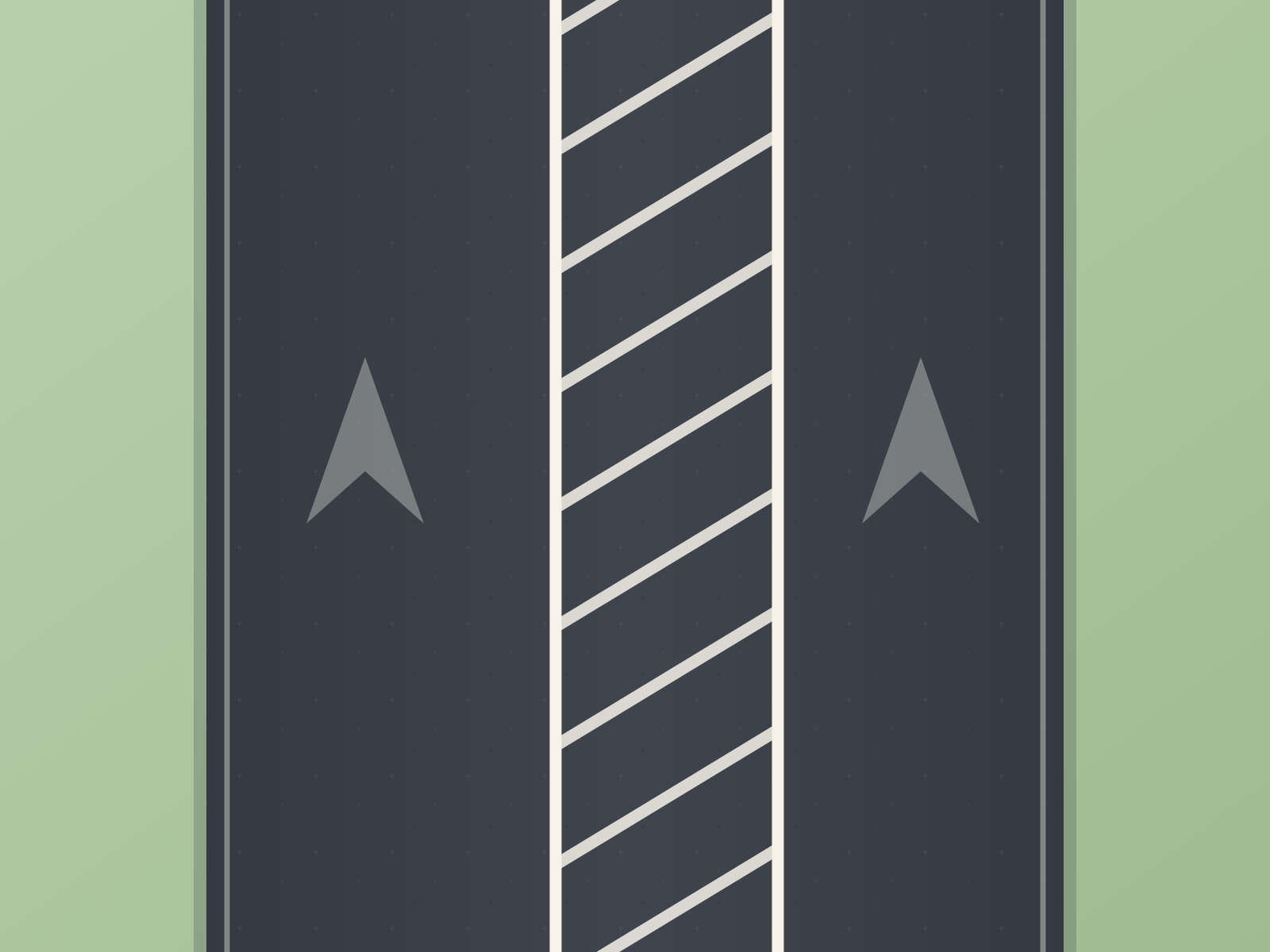
Diagonal stripes in a painted buffer area usually mean:
- A. It is a merge lane for all traffic
- B. Use it as a passing lane
- C. Park there briefly
- D. Do not drive in that area except as allowed
Show answer
D. Do not drive in that area except as allowed — Painted buffer areas are used to separate lanes or protect space. Drivers should stay out unless signs or markings allow entry.
Universal rule · checked against MUTCD 11th Edition, Part 3 — Markings — Pavement and Curb Markings · verified 2026-08-01
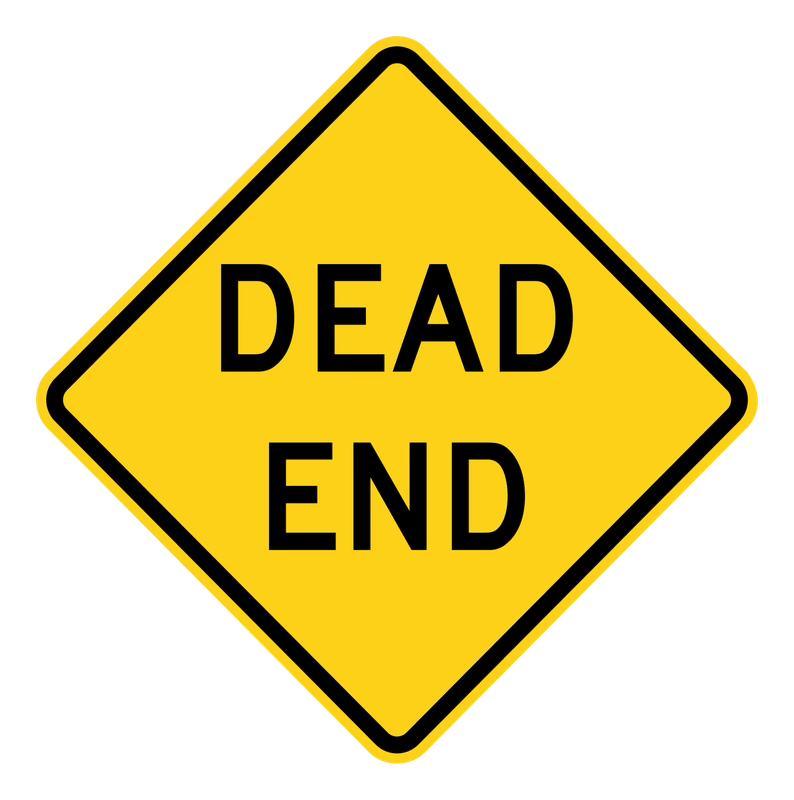
This yellow DEAD END sign warns that:
- A. A one-way street begins ahead
- B. The road ahead is closed for construction
- C. The road ends ahead with no through passage
- D. The speed limit drops sharply ahead
Show answer
C. The road ends ahead with no through passage — A dead-end sign warns that the road terminates ahead and does not connect to another road, so drivers should be ready to stop or turn around.
Universal rule · checked against MUTCD 11th Edition, Part 2 — Signs (General) — Traffic Signs — General · verified 2026-08-01
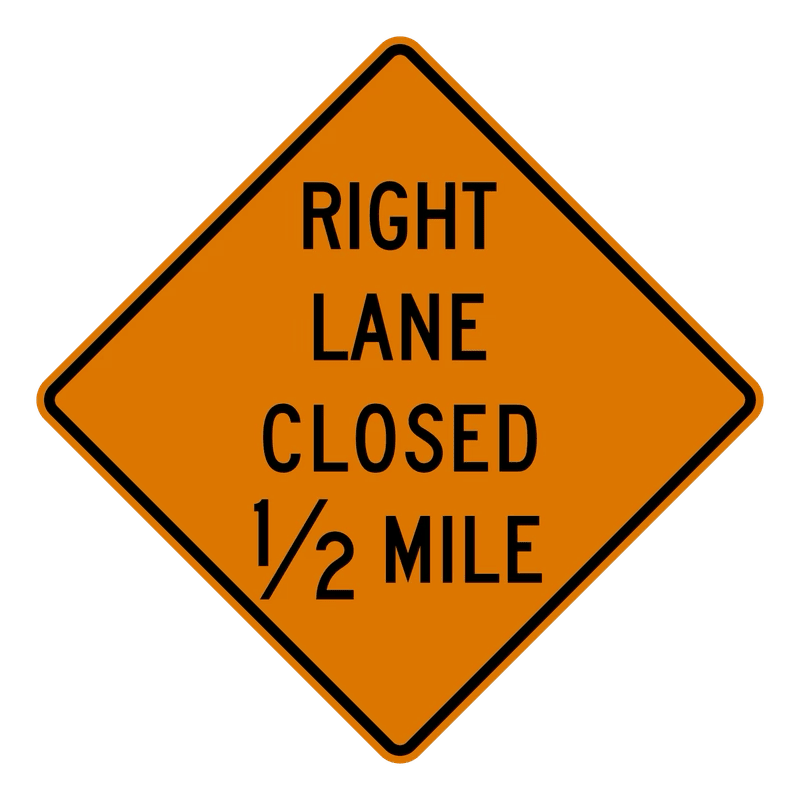
This orange right-lane-closed sign warns that:
- A. The right exit ramp is closed ahead
- B. The right shoulder is available for passing
- C. The right lane is reserved for trucks
- D. The right lane is closed ahead due to construction
Show answer
D. The right lane is closed ahead due to construction — This sign gives drivers advance notice that the right lane will be closed ahead for construction, so they should merge left early and safely before reaching the closure.
Universal rule · checked against MUTCD 11th Edition, Part 6 — Temporary Traffic Control — Temporary Traffic Control — Construction Signs · verified 2026-08-01
Yellow raised reflective pavement markers on the center line indicate:
- A. Separation between lanes of opposing traffic
- B. The edge of the road
- C. HOV lane boundaries
- D. Railroad crossing ahead
Show answer
A. Separation between lanes of opposing traffic — Yellow raised pavement markers on the center line indicate the boundary between opposing traffic lanes - same meaning as yellow painted center lines, but highly visible in rain and at night.
Universal rule · checked against MUTCD 11th Edition, Part 3 — Markings — Pavement and Curb Markings · verified 2026-08-01


